Saturday, August 18, 2012

St. Luigi Orione and Pope John XXIII


On various occasions John XXIII told of his first meeting with Don Orione when, at the start of his service at the Holy See in the twenties, he was invited to seek his advice. 

 He went out by Porta San Giovanni to the San Fillipo Institute, and the caretaker told him he’d find Don Orione in the yard. In a corner, a group of boys were playing pitch-and-toss with an elderly priest. The latter looked round, left his friends for an instant and asked: «Monsignor, are you looking for someone?» «Yes, I want to speak to Don Orione», Monsignor Roncalli answered. «I’m Don Orione. Be patient a minute: I’ll finish the game, wash my hands and I’m with you»

These words, said with great politeness and a smiling look greatly struck the then young prelate, shortly arrived in Rome from his native Bergamo, who wrote in his diary that evening: «28 March 1921. Easter Monday. In the afternoon with Monsignor Guerinoni I visited the church and the parish works of Ognissanti, outside Porta San Giovanni; and spoke at length with Don Orione, of whom one can well say: contemptibilia mundi eligit Deus ut confundat fortia. What is foolish to the world, God has chosen that it may confound the strong (1Cor 1, 27)» (Messaggi di Don Orione, 102, pp. 46-48). 


 That respect and friendship never diminished. To Douglas Hyde, an English journalist who asked what was the quality that emerged from Don Orione, the then patriarch Roncalli replied: «Don Orione was the most charitable man I’ve ever known. His charity went beyond the normal limits. He was convinced that the world could be conquered by love» (ibid, p. 49).


Saturday, August 11, 2012

Love for the Pope and the Poor


 In his letter “Which love for the Pope?”, Fr. Flavio Peloso shows us how our love for the Pope is expressed on the love and service to the poor.

 "Dear Confrères, let us renew today our childlike commitment to the charism of Don Orione. Our love for the Pope is not (only) for intellectuals, but for the “porters of charity”; it also calls for the apologia of the word and of the pen but above all for “the apologia of charity”. Our love for the Pope does not mean special strategies of pastoral work, but it means that everyone practices the “the strategy of charity”.
Don Orione was a saint that “belonged wholly to the Church and to the Pope” and yet people know him better as the “saint of charity”, “the father of the poor, the benefactor of suffering and abandoned humanity” (Pius XII). May it be said a little bit of us as individuals and as Congregation, that we are the “the Pope's men”, through the works of charity. 

 At this point, a story comes to mind. A few years ago, when I was a counselor, I visited Oradea, in Rumania, and met Basile Hossu, the Greek–catholic bishop of the town, a wonderful and good man. He recalled the many sufferings and humiliations undergone during the era of the communist oppression, especially aimed at the Greek-catholic communities. Then he cheered up speaking of the work of the Don Orione people in Oradea: “Your work, the way you care for the youth and for the poor, has brought about in the people a new attitude and new idea of the Church. I remember that one day I was traveling by car with Father Lazzarin: the police stopped us and were very rude and insulting towards me. Father Lazzarin, to justify himself, said that we were in a hurry to reach Oradea, where the Confrères and the boys of the Youth Center would be waiting for us. ‘Are you going to Father Luigi's?' the policeman broke in. ‘Yes, we are his Confrères'. The policeman changed attitude and spoke favorably of the Youth Center (Oratory) and of the boys. You see? – concluded Mons . Hossu – the work that you are doing in the Youth Center, on behalf of the boys and the youth, is making the whole Church of Oradea loved and respected.”

 
Another great churchman, Cardinal Paulo Evaristo Arns, Archbishop of San Paolo in Brazil , some years ago, put our Little Cottolengo forward as the beneficiary of the offerings of the “campaign for brotherhood” organized by the Bishops' Conference. He stated that the work of charity was “the door opener of the Catholic Church in the city”. It meant that the work done by the Congregation for the needy and for those affected by serious mental and physical handicaps, made the Catholic Church and its Pastors believable and closer to the people.


If you want to read the whole letter, please visit:


Saturday, August 4, 2012

Peace is Worth More Than Anything!


Some serious problems had arisen in a family of benefactors due to misunderstandings.
Don Orione, ill and suffering, (as we can see from the date of the letter, he had only a few more days to live...) forgot his own problems and became a mediator of peace. With great tact and strength. He had performed so many works of charity during his life.  But helping people to live in peace once again was not among the least of them.  It was certainly one of the most difficult.
It was also one of the most useful, because, it is true to say, "peace is worth more than anything."


Tortona, 16 January 1940.
Peace! Peace! Peace!

Dear Messrs. G. and A., my distinguished benefactors.
May the Lord be always with us!

At this time I am praying especially that peace, which is Christ's gift, will be a source of benefit for your good selves and for your distinguished Families.
With this in mind, but without anyone knowing, I have arranged a day of prayer for my patients with Exposition of the Blessed Sacrament for tomorrow, Wednesday.
And today I make bold to write this letter because I would like, with Divine help, to prevent the scandal that is about to happen...


- And I would like to write with holy freedom as a priest
... and, if you allow me, as a friend and a sincere one also.  I beg and urge you, in the holy name of God, to make peace among yourselves.  If you go any further along the road you are travelling it will become less and less possible.
You know that the longer the differences go on between relatives, the more the hearts are hardened.
Are you waiting for death to come?  But death would be even more terrible without peace!  You must therefore make peace, and do it now.  If not, there will be no more time!

- Thinking of your deceased parents and children.
You yourselves must make every sacrifice with the greatest and best will in the holy memory of your Mother and your Father.  Then everything will turn out right.
You will then leave a good example to your Children!  I understand that, in order to reach the peace that is hoped for, you will have to overcome a good bit of self-esteem; you will have to surmount many not inconsiderable difficulties, but everything can succeed where there is good will.
For peace and harmony you have to leave aside all other interests.  No sacrifice is too great for peace; with good will everything is possible: peace is worth more than anything!
I tell you in the name of the Lord that, if there is reconciliation in your souls, a great light of grace in the peace of the Holy Spirit will extend over your Houses.  Your health, and that of your Dear Ones, will be better and your lives will be longer and more serene.


Please excuse me if any words may have come out which could have displeased you; it was certainly not my intention.  You have known Don Orione for many years; you know the respect and the affection that I have for you.  You must look at the reasons for which I have written; you must look at the spirit and not at the words.

I remain always your most humble and faithful Servant in Jesus Christ.

Fr. L. Orione


"I leave you peace, I give you my peace."
(Jn 14. 27)


Saturday, July 28, 2012

Blessed Fr. Franciszek Drzewiecki, FDP


born at Zduny (Lowicz - Poland), killed in hatred of the faith at Dachau (Germany) on 13th September 1942, at 34 years of age, 11 of religious Profession and 6 of Priesthood.
 
Francis entered the seminary of Zdunska Wola (Poland) as a teenager. After the grammar and philosophy schools, he went to Italy in 1931, to the Mother House of Tortona, for the noviciate and the study of theology. Ordained priest on June 6th 1936, he dedicated the first few months of his priesthood to the Little Cottolengo of Genova Castagna. 

 
He returned to Poland at the end of 1937 and continued his work of teacher in the college of Zdunska Wola. In the summer of 1939 he was given the charge of the "Sacred Heart" Parish and of the Little Cottolengo of Wloclawek. Here he was overtaken by the Nazi September 1st invasion that soon became open persecution against the Catholic Church. On the 7th November of the same 1939, Father Francis, together with almost all the clergy of the diocese, was arrested and put in jail. A long "via crucis" of humiliations and sufferings brought him to various concentration camps and finally to Dachau. His fellow prisoners remember him as a "good man and a holy priest who edified by his kindness and attention".

After two years of hardship and privations, forced labour and heroic witness of strength and charity, he was killed on 13th September 1942. As he was being led to death, Father Francis affirmed calmly and willingly: "We are going… But we will offer, as Polish men, our lives for God, for the Church and for our country". These were his last words. Charity, the fruit of his habitual union with God, was the real framework of his life. It made him, first a model clerical student, then a zealous teacher and pastor and, lastly, it sustained him and carried him in the last horrible trial and death in the concentration camp. John Paul II proclaimed him blessed on 13th June 1999.


Saturday, July 21, 2012

Charity! Charity! Charity!


 In a Christmas Letter written in 1934, Don Orione reminds us the ideal of the Little Work of Divine Provvidence: Charity! Charity! Charity!

Charity! Charity! Charity! There is nothing dearer to Jesus Christ, nothing more precious than fraternal charity; so that we must take every care, my dear sons, to preserve it and increase it in ourselves and in our Congregation, and so be in Christ, one for all and all for one, since it is only that spirit which builds, cements and unifies in Christ. To such an extent that it would be better to abandon any question, even one posed out of love of the truth or zeal for God’s glory, if it might ever, even for a moment, embitter our hearts and weaken the spirit of charity.


Charity, says St. Paul, is patient and mild, sweet and gentle, strong and constant; it is enlightened and prudent, it is humble, fervent, untiring and denies itself.  It does all things to all men: it is not self-seeking, it is serene, it is not ambitious, it is not envious, it rejoices in the good of others, whether likeable or distasteful people. It is tolerant of the defects of others and, as far as possible, covers them with a cloak of love. It interprets words and actions in the most favorable way: it excludes every bit of egoism and finds its happiness in doing every good. The charity of Christ is universal and embraces Heaven and earth.  It is brave to the point of audacity, but most delicate, and all powerful and triumphant over all things.
Charity is simple and transparent; it is never troubled; it is not puffed up; it never seeks its own profit; it never becomes embittered; it remains beneath the feet of all and goes out to the hearts of all and enters all hearts.  Charity is not biased, it does not have a spirit of dispute, nor does it know ifs and buts; it has no spirit of contradiction, nor censure, nor criticism, nor complaining; charity does not know any of these things. Charity has always a serene face, just as its spirit is serene; it is quiet and never raises its voice when it speaks.  Charity is never lazy, but prompt and ever active, and works silently.
It has a unique prerogative which is all its own: it is always happy and content with everything, even the most humiliating beatings, insults and calumnies; in the knotty stick, which St. Francis spoke about, in contempt and the vilest humiliations, charity finds its perfect joy.
Charity is not dismayed by difficulties, since it trusts in God: God is its portion and the cup of its inheritance: with trust in the Lord, with patience and with time it knows how to hope and wait for the moments and the hours of God, for the success of every good enterprise.
Charity prefers the simplicity of the dove to the distrust of the serpent, and it does not want to know of the things of the serpent.
Charity is open to every good, from wherever it comes; it is able and wishes humbly to learn from all, always confident in the Lord and in the large or small amount of goodness that it can find in even the most alienated hearts.
Its zeal does not burn or break and is discreet, in the light of knowledge, because it knows human limitations and weakness and can understand them, and knows it is extremely difficult to find people without faults.
Charity does nothing improper: nor does it ever become agitated nor take notice of wrongs done to it; it conquers evil with good. It does not delight in injustice but is happy whenever it can rejoice in the truth. It excuses all things, hopes in all things, bears all things. It prays, endures, is silent and adores: it does not weaken!
There is nothing arbitrary nor hard about charity; it finds its happiness in spreading and reflecting around itself goodness, moderation and gentleness: it desires only one thing: to sacrifice its very self to bring about the happiness and salvation of others, for the glory of God.


All human knowledge is foolish if it is not flavored by charity with the love of God and neighbor: without this, knowledge swells heads. First charity then knowledge, my sons, because the latter will be destroyed, but the former is never corrupted and is eternal. It is charity, my dear sons, and only charity which will save the world! Blessed are those who will receive the grace to become victims of charity!
My brothers and sons, let us love God to the point of making ourselves victims, holocausts of charity, and let us love each other greatly in the Lord; there is nothing more pleasing to the Lord, who said: ‘I have loved you...: love one another’. (John 15: 9-10).
The great secret of sanctity is to have a great love for the Lord and for our brothers in the Lord. The Saints are the chalices of the love of God and of their brothers.  Love Jesus, love one another in Jesus: work to make people love Jesus and His Holy Vicar, the Pope; pray, work, suffer, be silent, love, live and die for the love of Jesus, the Pope and souls!
My dear friends, the Little Work of Divine Providence must be like a family in Jesus Christ. Bound by charity and united by undivided hearts in this moral body which is our Congregation, what great help we will get from the hand of God, and how happy, joyful and strong we will feel!
The Congregation will prosper and be blessed by the merits of all who help maintain unity and peace, because our strength, my dear friends, is in unity whose bond is Christ. Then with what joy and fullness of heart will we sing “how good and joyful it is when brothers live in unity”.
Charity is wholly directed to the good of the Church and of souls, and is the motto of Christ’s disciples and of the Church.  St. Paul wrote: ‘Faith, Hope and Charity: the greatest of these three is Charity’. Let us, therefore, try fervently to acquire charity.

Sunday, July 15, 2012

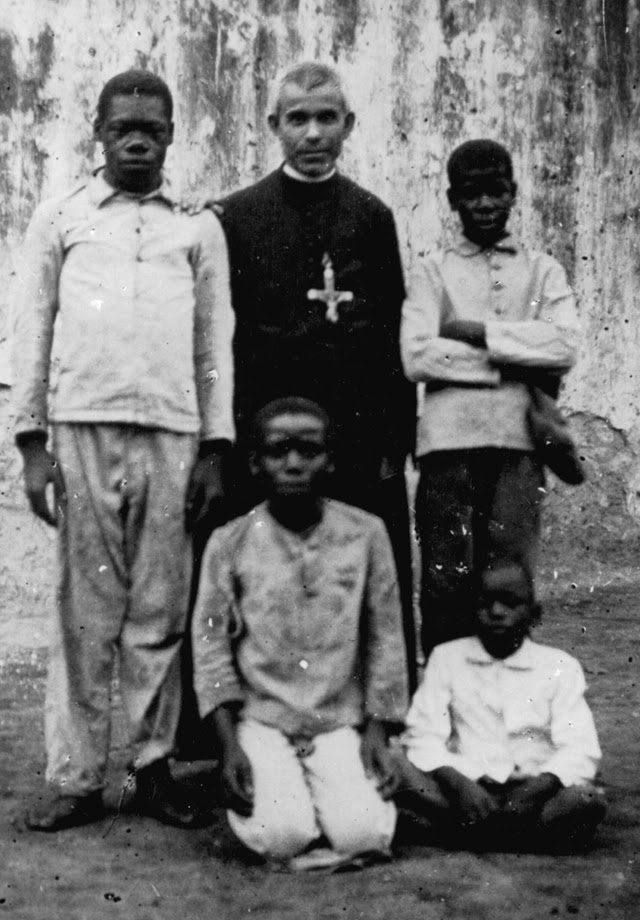
St. Luigi Orione and Africa


In 2010 the 19th FIFA World Cup took place in South Africa, which then became the first African country to host this tournament. During the championship, the eyes of the world were fixed on Africa and its people, as they sang together with Shakira: “This time for Africa”
Consequently we, too, concentrated our gaze more closely on our African confreres and houses, especially in view of the flowering and growth of Don Orione’s congregation in that continent. Perhaps we had not shown such interest before, but already many years previously our Founder had looked towards Africa and its peoples, and entertained dreams and plans for the future.


Brazilian Vocations for those of African Descent
            One of St. Luigi Orione’s first thoughts about Africa concerned the situation and problems of vocations among those of African descent. Vocations, especially among the children of the poor, had always been his goal, and were one of his reasons for founding a new congregation. He used to say, “My one and only ambition is to be the “priest of vocations”[1].
       At that time, he faced two obstacles: poverty and canonical impediments. It was thought that such candidates should not become either priests or religious because they had only recently embraced the faith, either having come from mission lands or been slaves. Additionally, some European congregations had experienced difficulties in bringing African vocations to Europe, where the concept of inculturation was hardly known and was not yet readily acceptable by the people.
       When the first group of Orionine missionaries reached Brazil in January 1914, black people still struggled for recognition, both in society and the Church, even though slavery had been abolished 26 years previously. However, Don Orione had other ideas about vocations among those of African descent.
The Congregation had been invited to carry out pastoral work by Silverio Pimenta Gomes at Mariana in 1907. The first group of missionaries had reached that country in 1914, but the Founder only arrived in Rio de Janeiro many years later, on 20th August 1921.
After some months in Brazil Don Orione met Bishop Silverio, and both worked in favor of vocations among people of African descent. It should be taken into account that Bishop Silverio was himself of mixed-race and a very learned man.
Because of the reluctance of some dioceses and congregations to accept black people, Don Orione proposed to the Bishop that he should found two new branches of his congregation, one male and the other female, only for black people. Today, this may sound like discrimination or xenophobia, but at the time it was the only way to help black people to become either religious or priests.
Regarding the main topic discussed at that meeting, Don Orione wrote:
“As for the matter of black priests, Archbishop Silverio told me that it would be an act of justice to them, as it was they who, as slaves, had colonized Brazil. I know that some Bishops will oppose me, but “in nomine Domini” I will throw myself at their feet and let them walk over me. Another Archbishop has already spoken ill of you to me because you had admitted black people and those of mixed race. But I will either work for the vocations of black people “in Domino”, or I will leave Brazil. Will there be disappointments? I am sure there will, but I will not give up working with you for vocations among black people.”[2]

From then on, Don Orione was resolved to work for vocations among those of African descent, even though he was well aware that he would be misunderstood and criticized, and efforts would be made to stop him.
He also saw the mysterious ways of Divine Providence in it:
“And this is what I believe that Our Lord Jesus Christ desires and is asking of us: that black people from this land of His Holy Cross should go to redeem their former brothers (...). There, where these beloved black brothers of ours were taken into slavery, it is there they should return to bring the freedom of the children of God, and also labor so that that continent, which so far has seemed to resist the work of the White Fathers, may be conquered for the Cross by the preaching, the sacrifice and the blood of black missionaries.
           Thus, the black people who were so brutally seized and deported from Africa, who are still the victims of anti-Christian and uncivilized prejudices and a social injustice which has dragged them down for centuries, will set out on a new crusade, and God will be at their head…”[3]
But his dream was not to come true yet, because Archbishop Silverio passed away on 1st September 1922, and with him, any hopes for the foundation and recognition of the religious institutes for black people.

A Mission in Africa
       In a very interesting letter to Fr. Biagio, Don Orione spoke about inculturation and respect for other cultures, both in formation and on the missions and the different vocations within the congregation as priests, brothers and missionaries.
         Speaking about vocations for the missions, Don Orione mentioned a mission in Africa: “Vocations for the missions: I am going to Africa soon, where we will open another mission.”[4]
        In 1920, the Congregation had only one mission in Brazil, where Don Orione had not yet been[5], so that is why he talked about “another mission”.

A Leprosarium in Ethiopia
       On 26th June 1936, St. Luigi Orione read about a leprosarium to be opened in Adwa[6]in the North of Ethiopia. The following day, he sent a telegraph to the Minister of Education, Cesare Maria De Vecchi[7], offering both female and male religious personnel for the hospital. For him, it would be an opportunity to serve the poorest.
            “Trusting in divine help and with the approval of the Holy See, I offer myself and my male and female religious personnel, all Italians, to serve in the Eastern African leprosarium, glad  of this chance to give our lives to serving Christ in our poorest brothers.”[8]
On the same day that he sent the telegraph, he also informed Fr. Sterpi about it in a letter, where he also enclosed the text of the telegraph.
      “When I read yesterday that a Leprosarium is to be opened soon in Adwa, I immediately sent a telegraph to Italy, a copy of which I enclose: “Your Excellency, De Vecchi - Minister of Education – Rome. Trusting in divine help, and with the approval of the Holy See, I am offering myself and my male and female religious personnel…”[9]
            A few days later, he wrote to Fr. Bonetti and informed him about the telegraph and the acceptance of the Leprosarium in Abyssinia: “I have telegraphed the Italian Government and, in the name of God, accepted a big leprosarium which is to be opened in Abyssinia.” [10]

St. Luigi Orione on African Soil
            St. Luigi Orione wrote and sent three letters[11] from Dakar,[12] (Senegal, then a French Colony) on 27th June 1922, where his ship put in during his return voyage to Italy from South America. In a Letter to Fr. Contardi, he wrote: “Greetings from Dakar.”[13]
            In another letter, written after reaching Italy, he said that he had gone ashore in Dakar and seen “those who sweep”. “I reached Dakar and went ashore, where I saw those who sweep.” [14]
            We do not know what he meant by this remark about “those who sweep”. It may have been because it was an unusual job for men.[15]

Port of Dakar
 
Something about Inculturation
          In a letter to Fr. Pensa, St. Luigi Orione spoke about respect for other cultures, both in Italy and abroad, as well as following the customs and traditions of the place where religious were working.
          However, he did not use the word “inculturation,” though he transmitted this idea of adapting Catholicism to the customs and minds of the different peoples. 
           In this letter, he mentioned that in pictures of Our Lady in Africa, she was depicted as black, and wearing African clothes.
           “Is it likely that Our Lord wore the sort of clothes in which he is depicted today? I am sure he did not. Nowadays, he is shown dressed like this to conform to the customs and mentality of the people. And in Europe – where the white Caucasian race is dominant- the Holy Virgin Mary is fair-skinned and dressed in European style. In Africa, she is shown as dark-skinned and dressed in African style, while in China ...  missionaries depict her with a Chinese pigtail and Chinese clothes. Well, this is what we need to do to win over souls.” [16]

Conclusion
      We can divine Don Orione’s missionary heart from his African ideas, knowledge and dreams.
  • His concern for people of African descent in Brazil indicates a man who was not influenced by racist ideas or discouraged by misunderstandings, but rather a prophet and pioneer.  
  • He desired to go to evangelize Africa and to care for lepers, praising the missionaries’ work and practice of inculturation
  • He felt strongly about and lamented the effects of colonialism, such as bloodshed, wars, conscription, etc.
  • He knew something about the history of African religions, both pagan and Christian, as well as the lives of saints related to Africa and its people.
  • He spent a brief period on African soil.

      
       Africa was present in St. Luigi Orione’s thoughts and dreams. But the story was not to end there, for in 1971 his children came to perpetuate his missionary and charitable legacy there. 

Divine Providence then caused the Orionine family to grow, and African sons and daughters have come to enrich the Orionine family and charism with their ancient wisdom and traditions.

Today the Don Orione family is no longer in Africa, but it is already African.

 Fr. Facundo Mela, fdp


[1] Papasogli George, The Life of Don Orione, IV ed. (updated) Gribaudi, Milan 1994, p. 365.
[2] Letter to Mother Teresa Michel. Mar de Hespanha, 14th October 1921. Scritti 50,112ff.
[3] Idem.
[4] Letter to Fr. Biagio. Tortona, 5th August 1920. Scritti 32, 5 and 32, 9.
[5] His first trip to South America was in 1921.
[6] Adwa (Adowa, Aduwa, or Adua) is a market town in northern Ethiopia.
[7] Cesare Maria De Vecchi was governor of Italian Somaliland from 1923 to 1928 and the first ambassador to the Vatican after the Concordat of 1929. Don Orione knew him personally.
[8] Draft of the telegraph to the Minister of Education, Mr. De Vecchi. Scritti 93,509 and 93, 377.
[9] Letter to Fr. Sterpi. Buenos Aires, 27th June 1936. Scritti 19, 43 and 19, 83.
[10] Letter to Fr. Valentin Bonetti. 7th July 1936 (there is no mention of the place, but it was Buenos Aires). Scritti 38, 216 and 38, 224.
[11] Letters to Fr. Francesco Casa, Fr. Enrico Contardi and Fr.Giuseppe Zanocchi. Dakar, 27th June 2010.
[12] Dakar is the capital city of Senegal, situated on the Atlantic coast of the Cap-Vert Peninsula. It has one of the largest deep-water seaports along the West African coast. Its position, at the crossroads of the major sea-lanes linking Europe to South America, makes it a natural port of call for shipping companies
[13] Letter to Fr. Enrico Contardi. Dakar, 27th June 2010. “Ricevete un saluto da Dakar.”
[14] Letter to Fr. Enrico Contardi. The date of the letter is 4th …. 1922. There is no mention of either the place or the month, but because of the context of the letter, immediately after his arrival to Italy, it is supposed to have been written from Genoa on 4th July 1922. He mentioned having seen “those who sweep.”
[15] In Italian, the word quelli is a plural male pronoun.
[16] Letter to Fr. Pensa. Tortona, 5th August 1920. Scritti 20, 64 and 20, 89. There is another version of this text in Scritti 20, 97d.

Sunday, July 8, 2012

Venerable Friar Ave Maria


Cesare PISANO, (1900-1964) blind hermit of Divine Providence, from Pogli di Ortovero (SV, Italy), died at Voghera (PV, Italy) on 21st January 1964, at 63 years of age, 42 of religious profession and 52 of blindness. 

Cesare Pisano became blind when he was only 12. A playground friend, accidentally, shot him in the face, with a rifle: his eyes went dark forever. At first, he went through a period of desolation and depression, to the point of losing his trust in God. But a religious sister first and, subsequently, Don Orione, brought him to hope again. At 20 he entered the "Paterno" (Mother House) of Tortona; at 23 he became a hermit with “the task of praying", as the Founder told him. 

Friar Ave Maria spent his life in seclusion, penance and prayer in the hermitage of Sant'Alberto di Butrio (Pavia). Don Orione referred to him as "a beautiful soul: I would not be surprised if he performed miracles". "The happy blind man" as Friar Ave Maria liked to call himself, became an apostle to his brothers, physically or spiritual blind, through his writings as well as his prayer. He wished to celebrate the "golden jubilee" of his blindness, in 1962, inviting everyone to "a solemn hymn of thanksgiving to blessed Jesus, who in a marvelous way knows how to change everything into good for those who love him. You have changed my darkness into light and my sadness into joy. You alone, oh Jesus, are my light and my joy".

Divine Intimacy, his humble and joyful goodness, the wisdom of his words, the holy countenance of one who is absorbed in thoughts of heaven, acquired for him the respect of many people in need of comfort and light. He was blind, but it was enough to look at him - many people remember - to realize that our poor everyday life and the decisions we had to take, would become enlightened by his presence. He brought people back to simplicity and to what is essential. You could tell that he was in constant, heart to heart and transparent contact with God. 


 His body lies in the crypt of the hermitage of Sant'Alberto di Butrio. A pontifical decree about his "heroic virtues" of the 18th December 1997 means that the Church officially recognizes him as "Venerable".